


Join me in this live, two-hour class and discover the Five Things I’ve Learned about the ways that description, exploration, and discovery can launch a poem – and us lead someplace remarkable and unexpected.
I’m Mark Doty, a poet, essayist, memoirist and nonfiction writer, and I hope that you will join me for Five Things I’ve Learned about Building a Poem from Small Beginnings.
Though working in a variety of forms is a pleasure, perhaps something like playing more than one musical instrument, my heart has always remained with poetry and its remarkable ability to hold something close to human subjectivity. None of us will meet Emily Dickinson or Walt Whitman, but we can know them through the poems that contain so much of how they experienced the world; their voices, their longing, even something of the way they breathed are here with us now.
I’ve published ten books of poems and five books of nonfiction prose and have been amazed by readers’ responses and the honors those volumes have received, among them the National Book Award, the National Book Circle Award, and the T.S. Eliot Prize. I’ve taught in many universities, including Princeton, Stanford, Iowa, Rutgers and NYU. Those are welcome recognitions, but it’s the actual practice of writing poetry, the work of description, exploration and discovery that matters most to me. As a teacher of composition once said, How do I know what I think until I see what I say?
For the poet, of course, it’s not just a matter of thinking; we want to fuse ideas and questions, emotion and sensory detail into a seamless whole that catches some of the character and complexity of being alive. That’s just what we’ll practice in this class, beginning with something small – maybe something you noticed by the roadside, a phrase you overheard, a bird’s shadow on the grass. Any moment that strikes you may launch a poem, and lead you someplace unexpected.
Together, we’ll talk about cultivating receptivity, how to collect and save such images, and work with a series of short exercises aimed at delving deeper, leaning into them to see what they might yield. This method of composition helps uncover a poet’s recurrent questions, our inescapable concerns. Our obsessions, the wonderful poet Lynda Hull used to say, are “rocket fuel” – they make the poem lift off and fly. We’ll talk about some strategies for revising early drafts, ways of zeroing in on what’s most important. This practice helps experienced poets sharpen their vision and widen their range, and offers those who are just starting out a door into a rewarding poetic practice.
You’ll leave the class with some new tools to use at your desk, some beginnings of a poem or poems, and, I hope, some renewed faith in poetry’s ability to get us a little closer to experience, and to what Mary Oliver memorably called “the furnace of meaning in the human heart.”
Five things you’ll be taking away from our work:
- that no image or memory is too slight a beginning.
- that out of all that we see, we select those things we notice and remember because they suggest meaning to us, or contain feeling.
- that the first words and phrases that come to us are important, but continuing attention yields more, and revision can bring us closer to the heart of the poem.
- that acts of description are also self-portraits.
- that the practice of poetry (both as writers and readers) deepens our engagement with language, with ourselves, and with others.
Whether you’re a practicing poet – or a reader eager to know more about how poems and poets work – I do hope you’ll join me.
–Mark Doty
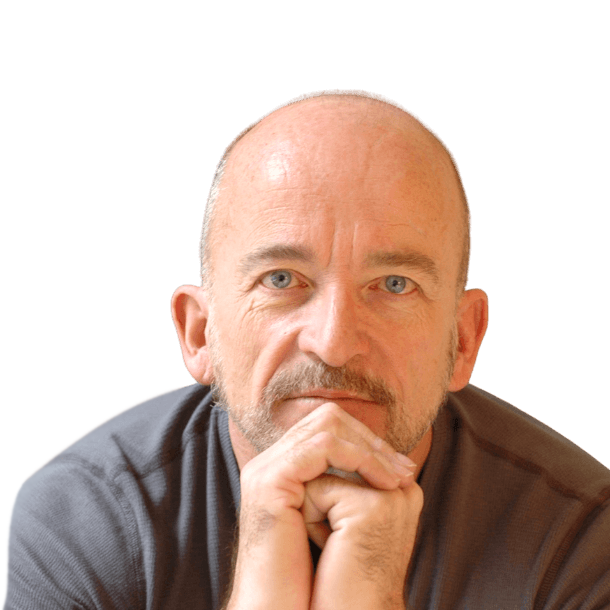
About Mark Doty
Mark Doty is the author of nine books of poetry, including Deep Lane (April 2015), Fire to Fire: New and Selected Poems, which won the 2008 National Book Award, and My Alexandria, winner of the Los Angeles Times Book Prize, the National Book Critics Circle Award, and the T.S. Eliot Prize in the UK. He is also the author of four memoirs: the New York Times-bestselling What Is the Grass, Dog Years, Firebird, and Heaven’s Coast, as well as a book about craft and criticism, The Art of Description: World Into Word. Doty has received two NEA fellowships, Guggenheim and Rockefeller Foundation Fellowships, a Lila Wallace/Readers Digest Award, and the Witter Byner Prize.
 You and a guest could win two tickets to the class of your choice.